
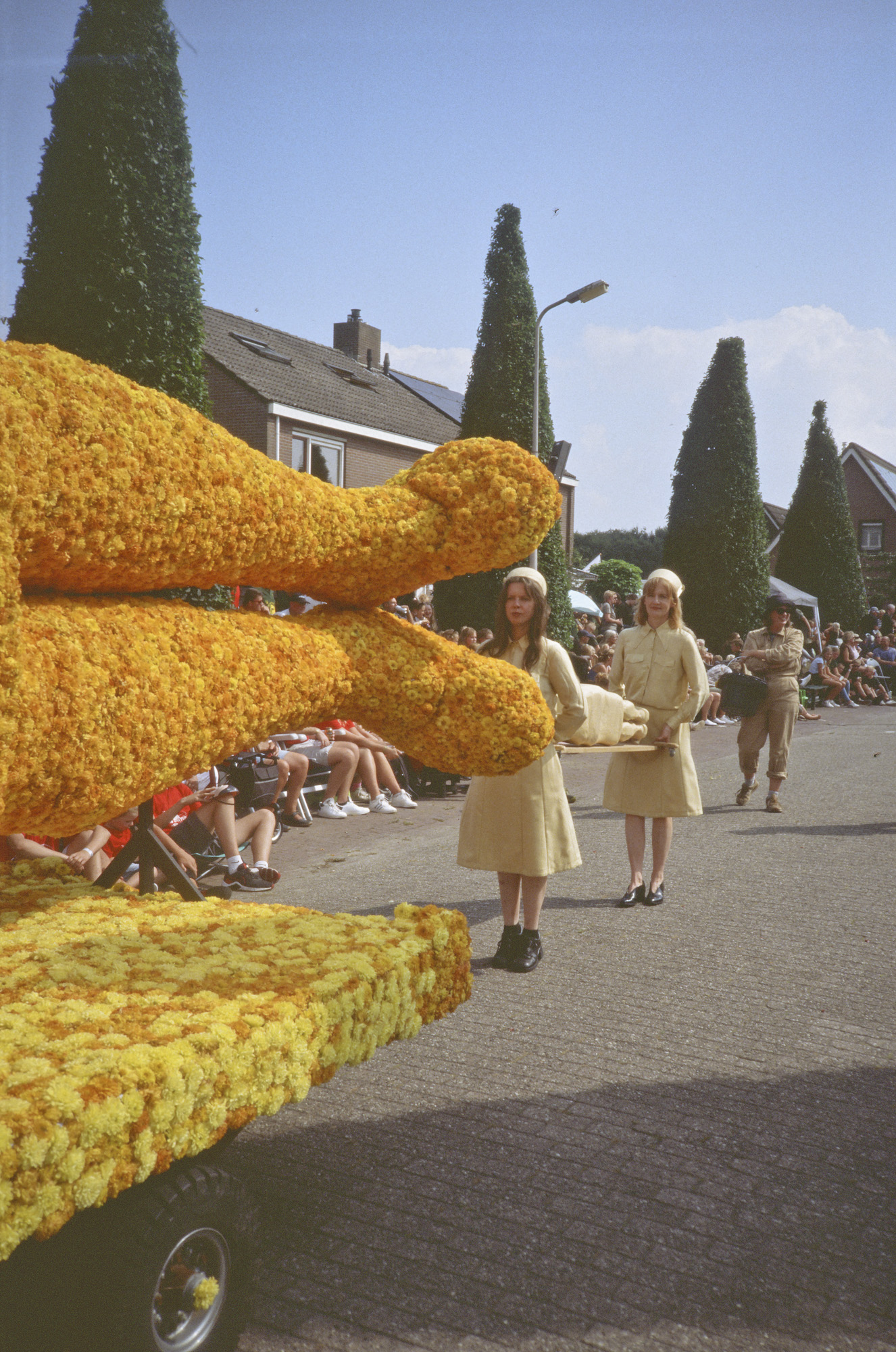
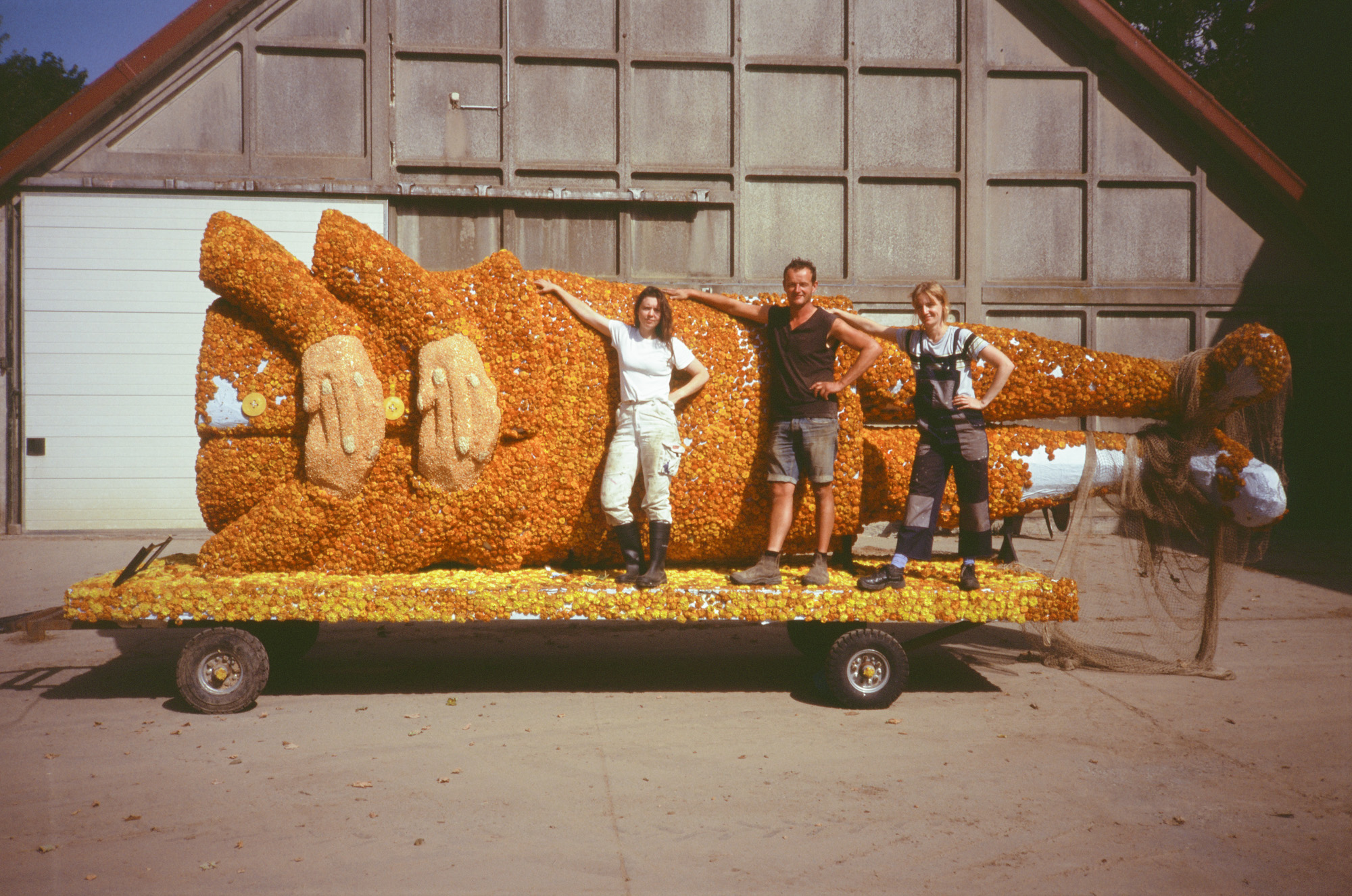
Invited by Polder Triennale, a new initiative about changing relationships between cities and countryside, we paraded with our sculpture “Out of Service” on the traditional flower corso in Sint-Jansklooster, NL.
Sint-Jansklooster, a former fishing village, is located on the border of the Noordoostpolder (part of Flevoland, the twelfth and newest province of the Netherlands). This area corresponds to the eponymous polder (land reclaimed from the sea), which was fully drained in 1942, from the former Zuiderzee.
Sint-Jansklooster is also situated within the Bible Belt, an area with a significant number of conservative Protestants. It is important to note that the Bloemencorso (flower parade) is unrelated to Carnival, a Catholic tradition.
We were, therefore, the first foreigners allowed to participate in this community project, which involves almost the entire village. Residents contribute their time and money each summer to bring their float group to life.
Polder Triennale is an initiative by architect Rianne Makkink, cultural strategist Willem Schenk, and curator Jules van den Langenberg. Its aim is to showcase, discuss, experiment with, and initiate ideas and gatherings about the shifting dynamics between urban and rural areas.
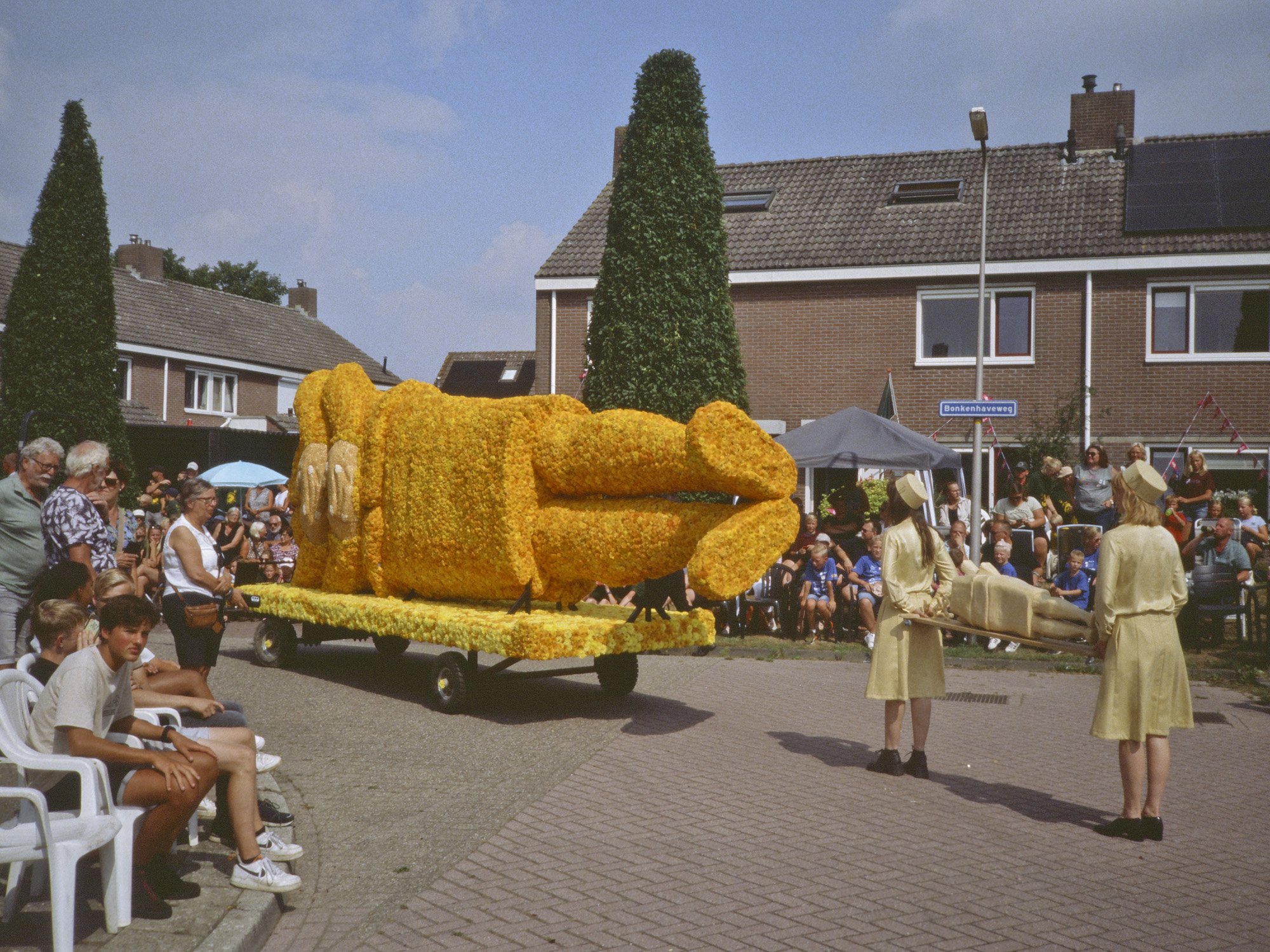
The Bloemencorso (flower parade) can be ambiguously traced back to harvest festivals and allegorical parades, its history and popularity are tied closely to commerce of flower bulbs. Villagers self-organise all year round in separate groups where they design, finance and execute the floats for the summer parades. These laborious activities are done in spare time but considered equally valuable as work, the groups sometimes take one work to make money for the collective or own shared pieces of land that are harvested to make profit for the collective. The parades are an ancient example of commoning, of collective ownership and shared work.
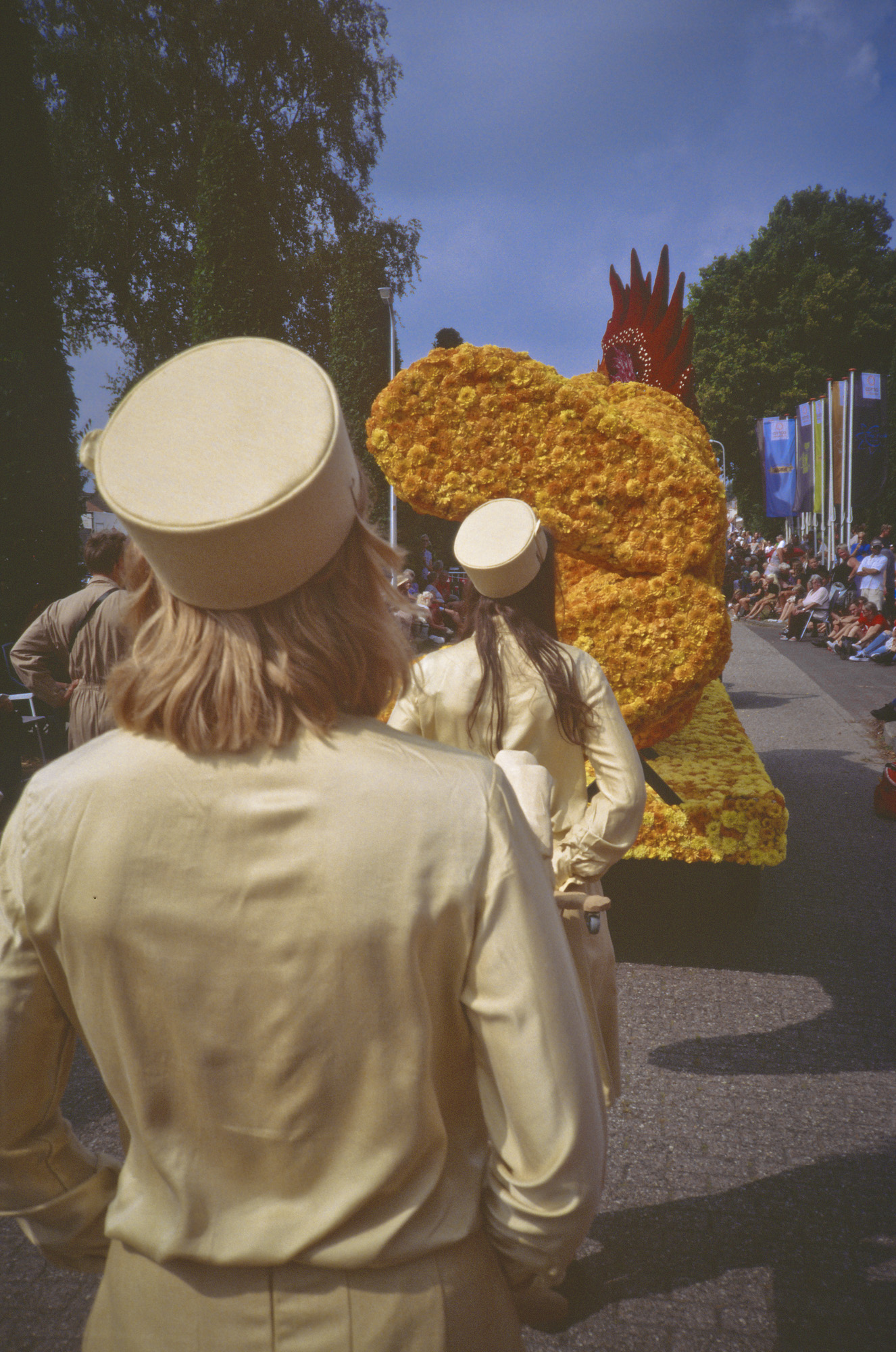
The flower parade at its core exists as an attempt to reach the sublime, we’ve experienced this as we were learning from the locals in Sint Jansklooster in summer 2022. Each float has a defined concept; a myth, a season, a poem around which a fantastic virtuous design is drafted. They should be anatomically correct and splendid, the floats are almost baroque-like, complex movements and patterns that become even more elevated by the hundred thousands (dahlia) flowers that are pinned on manually. Political or religious statements are not welcome, the corso in its essence is about beauty.
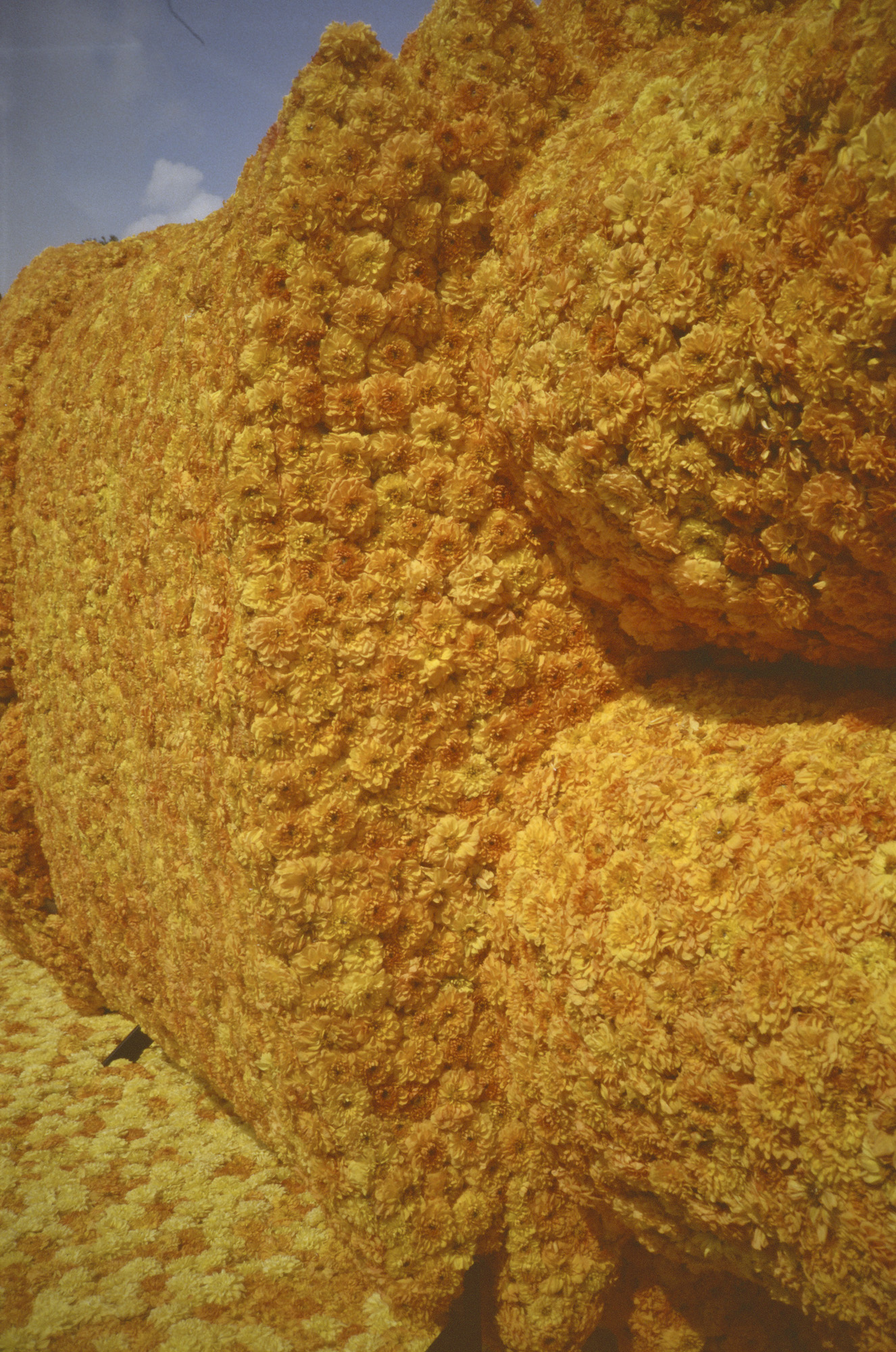
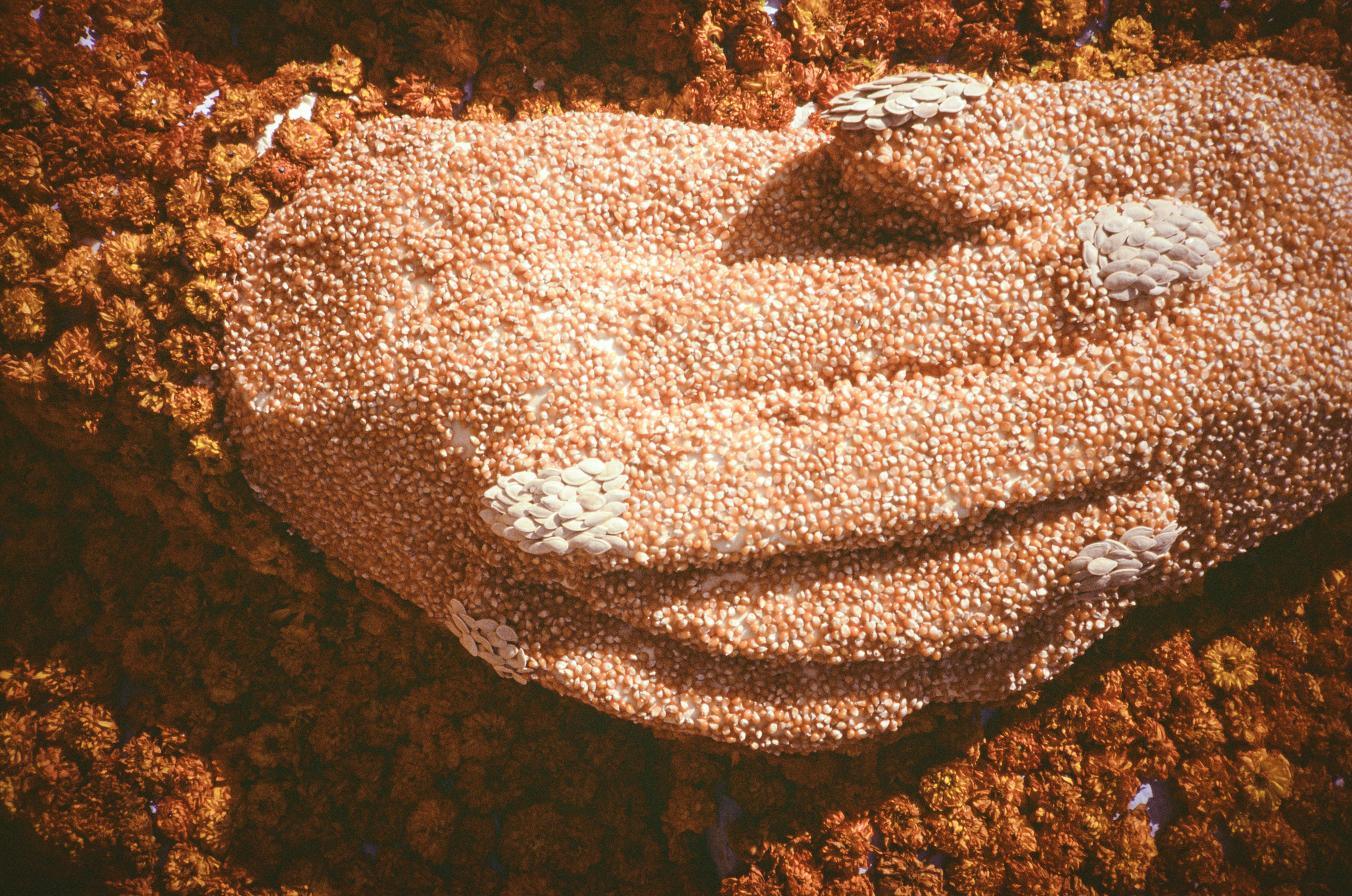
Over 20 000 dahlias were necessary to achieve our float.
We went for the Golden Scepter and Yellow Heaven dahlias.
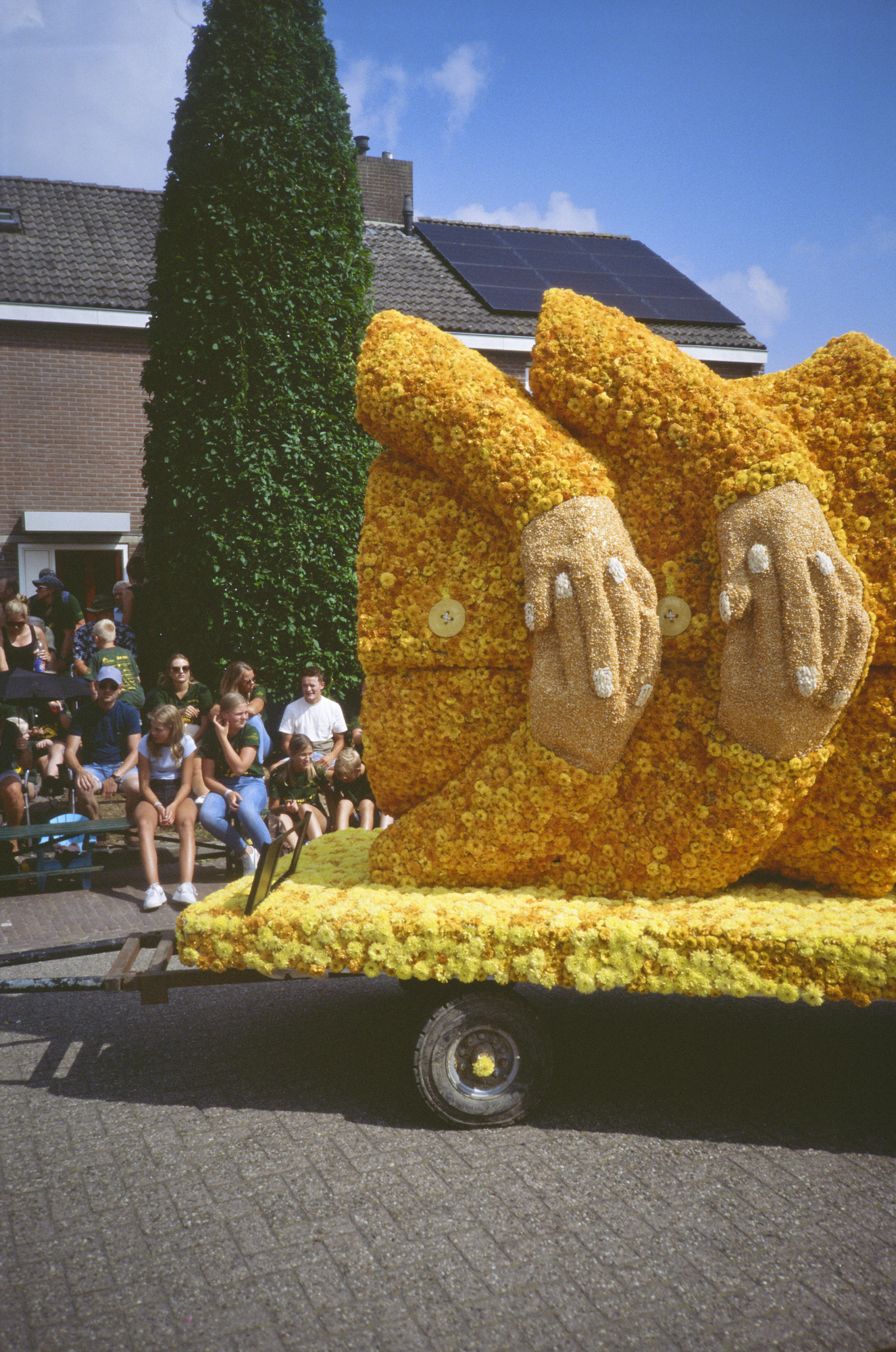
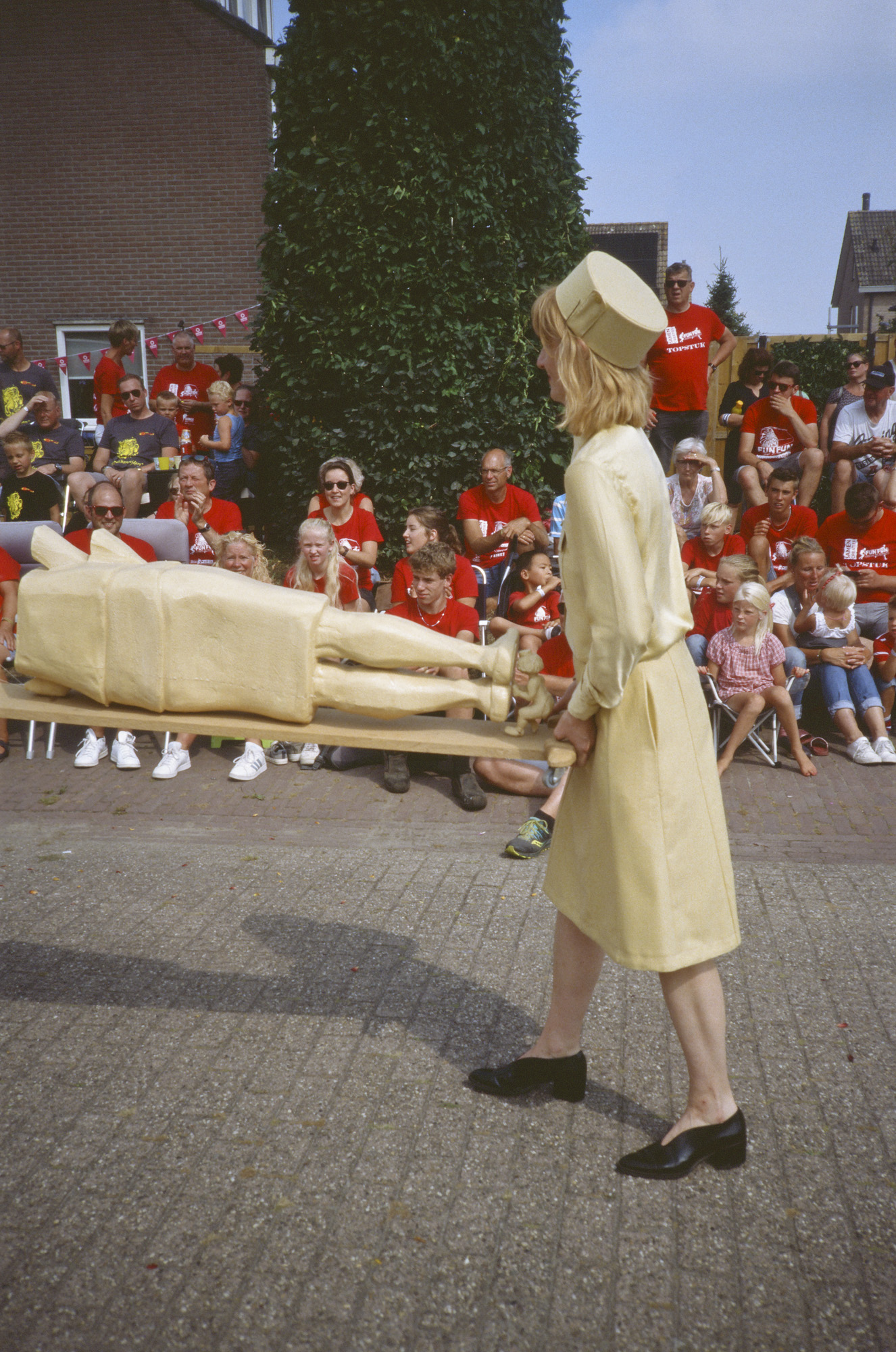
The audience was sceptical.
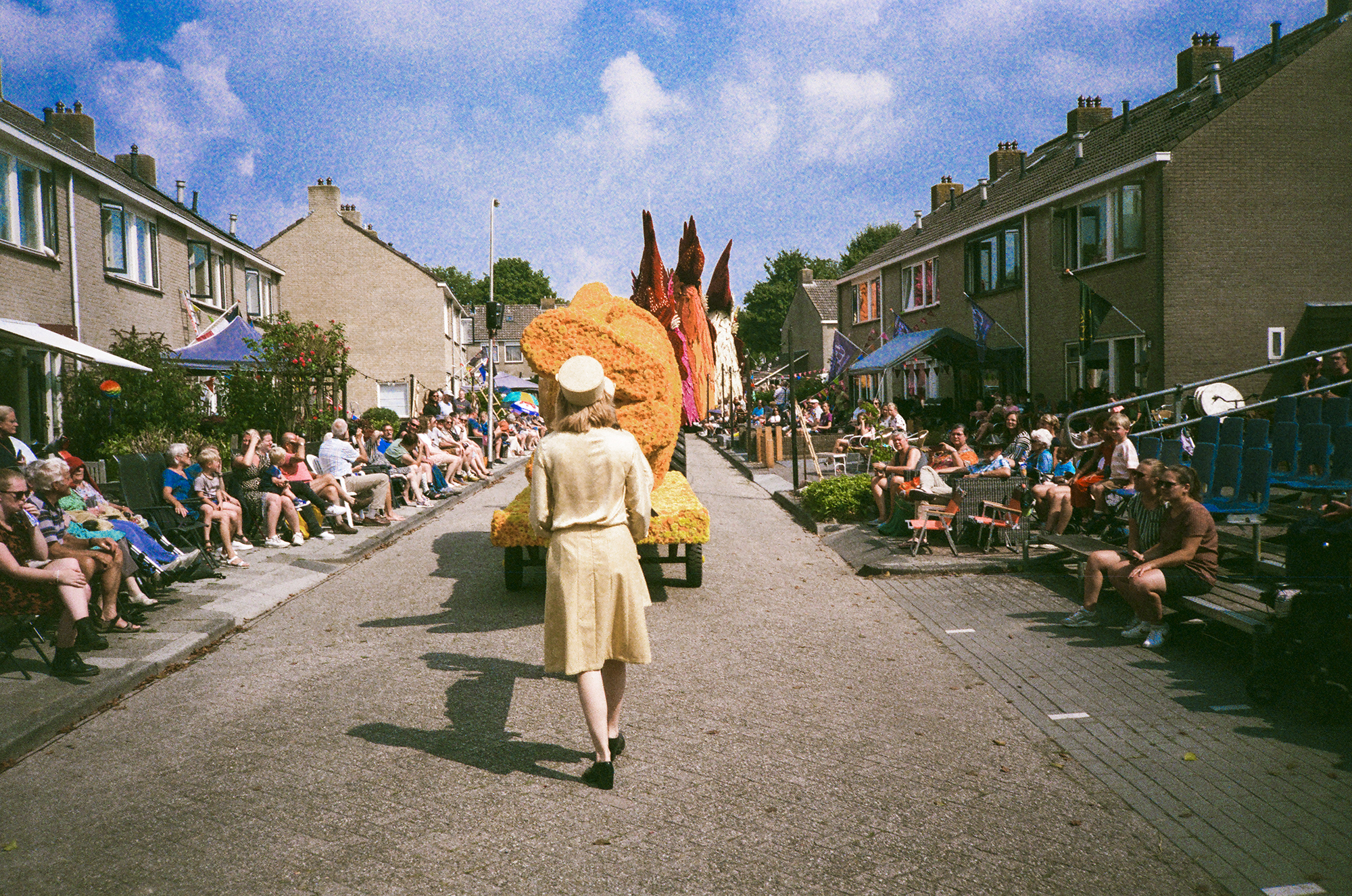
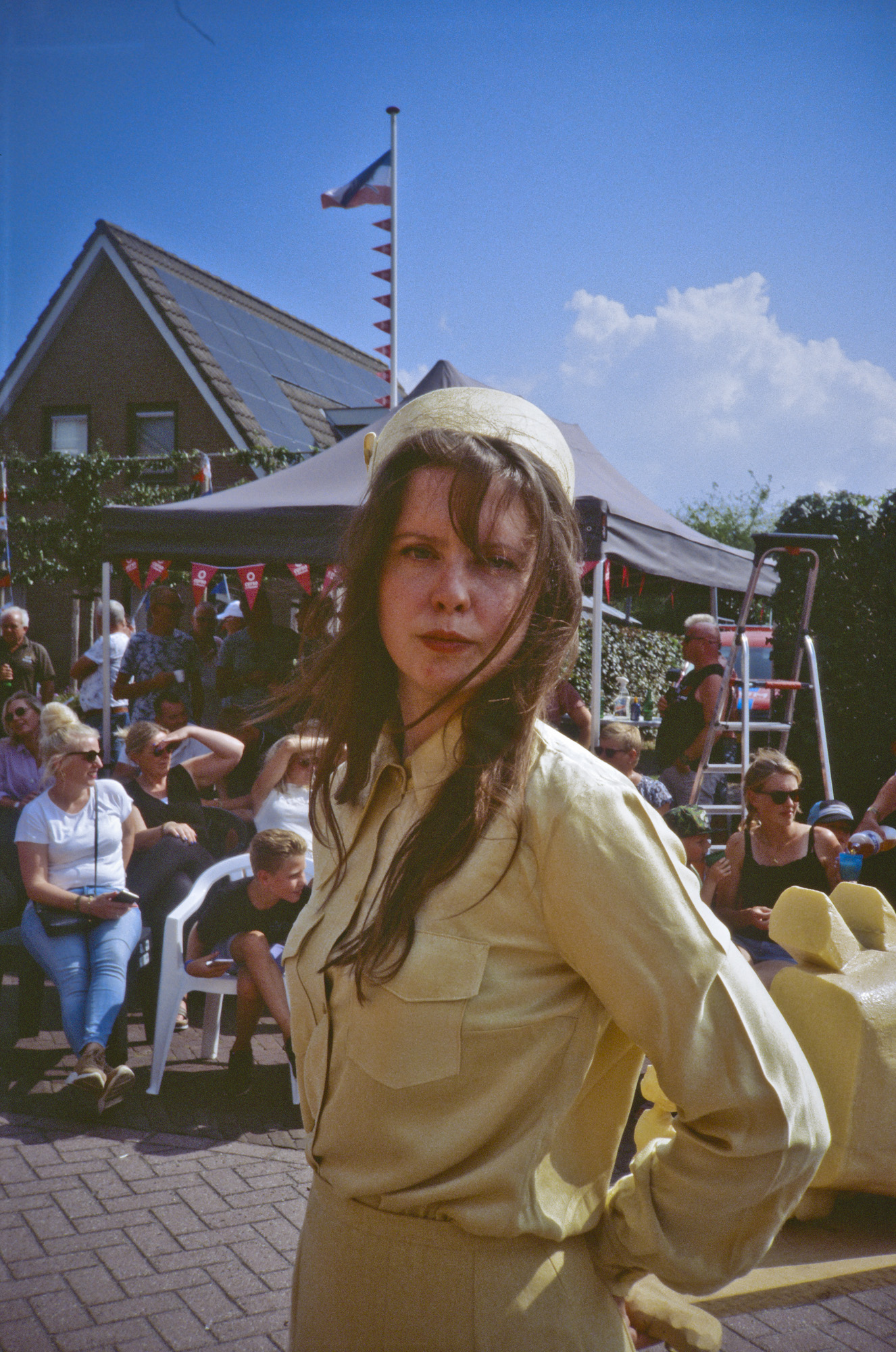
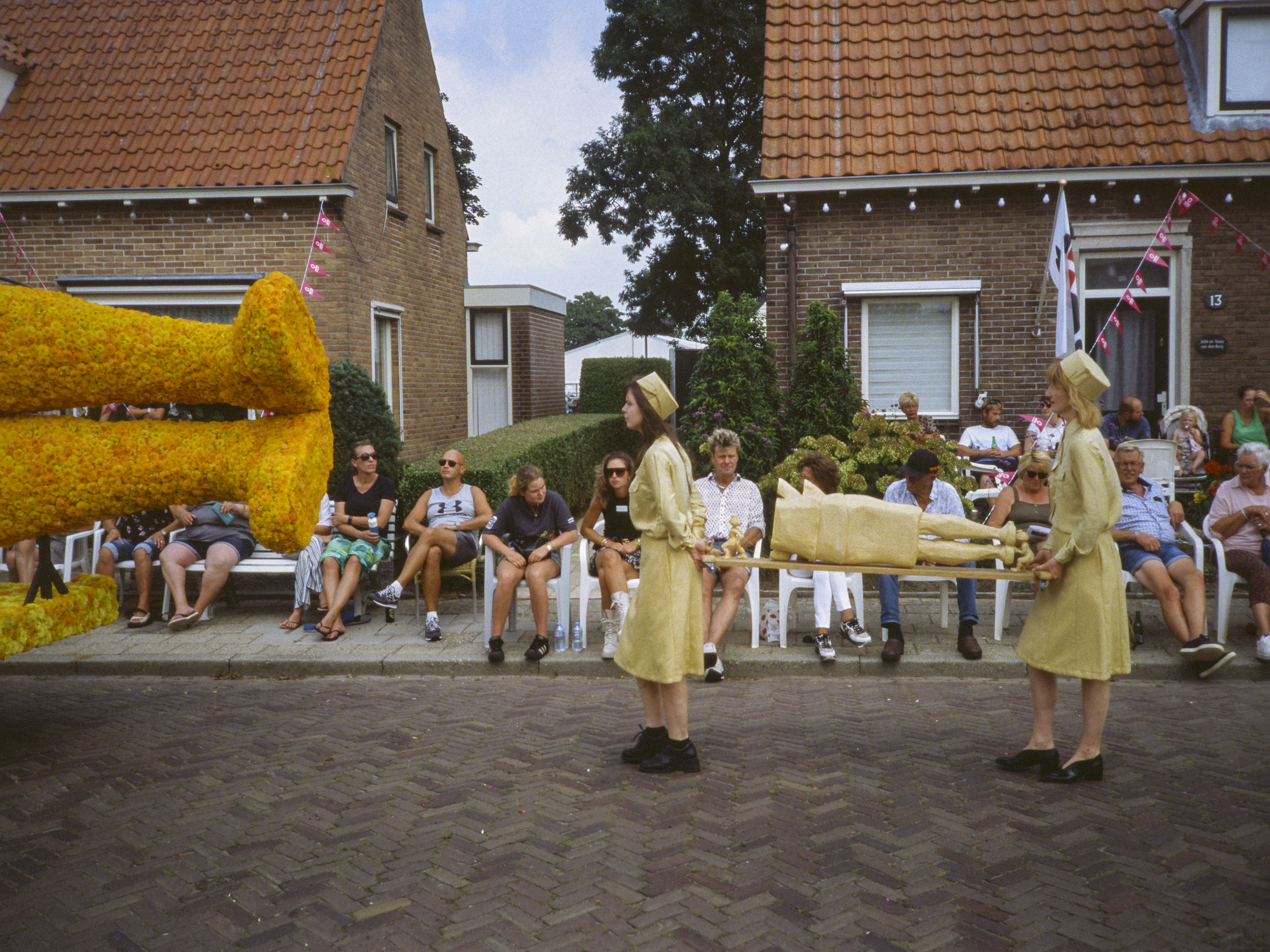
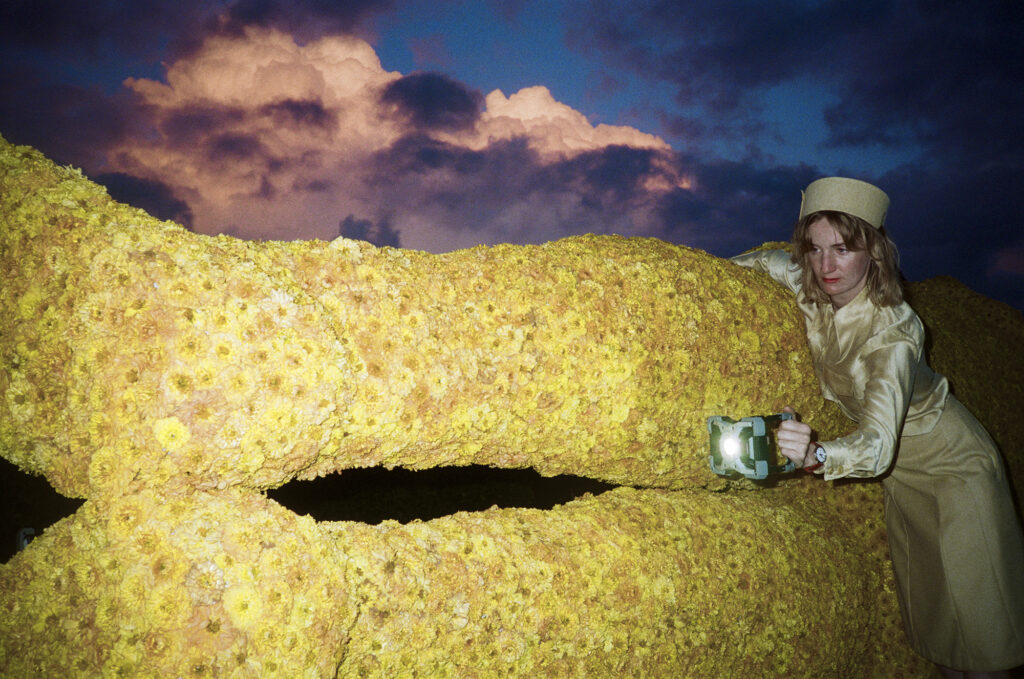
The parade also took place during the evening with specific lighting effects.
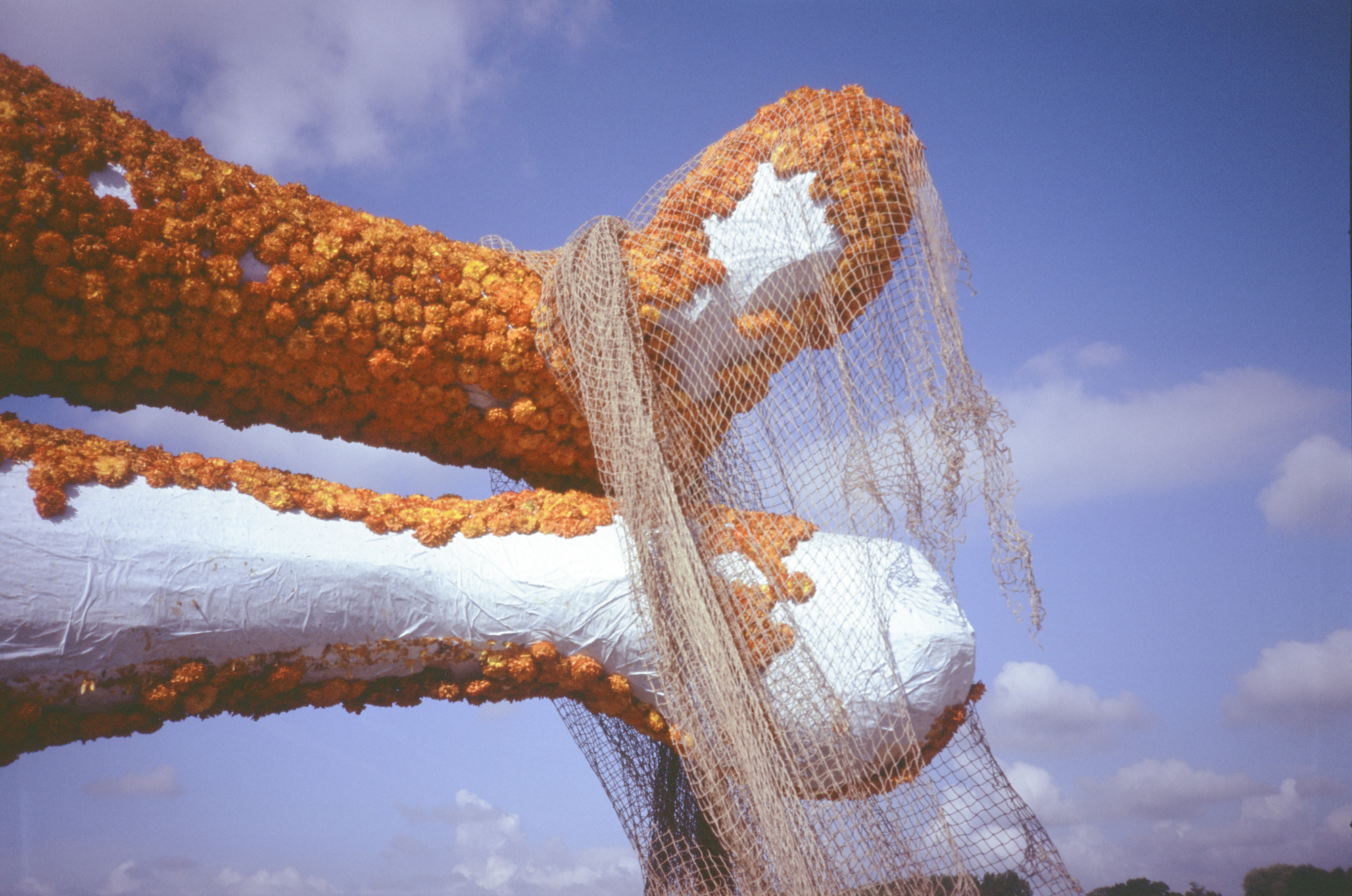
The sculpture is ephemeral as flowers start drying after 1 day.
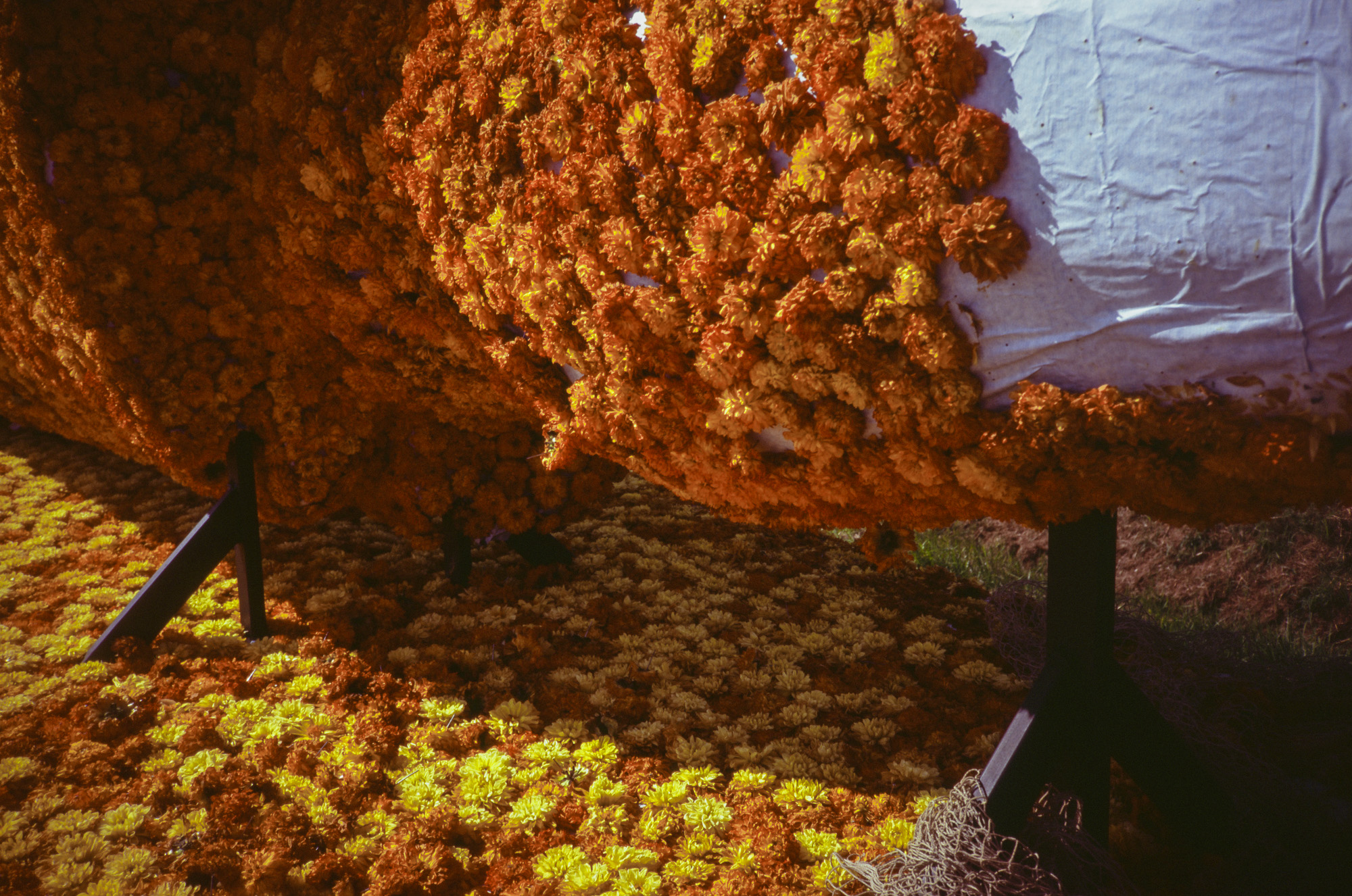
Dismantling the float after the parade with Noël, the farmer that warmly hosted us for the construction.
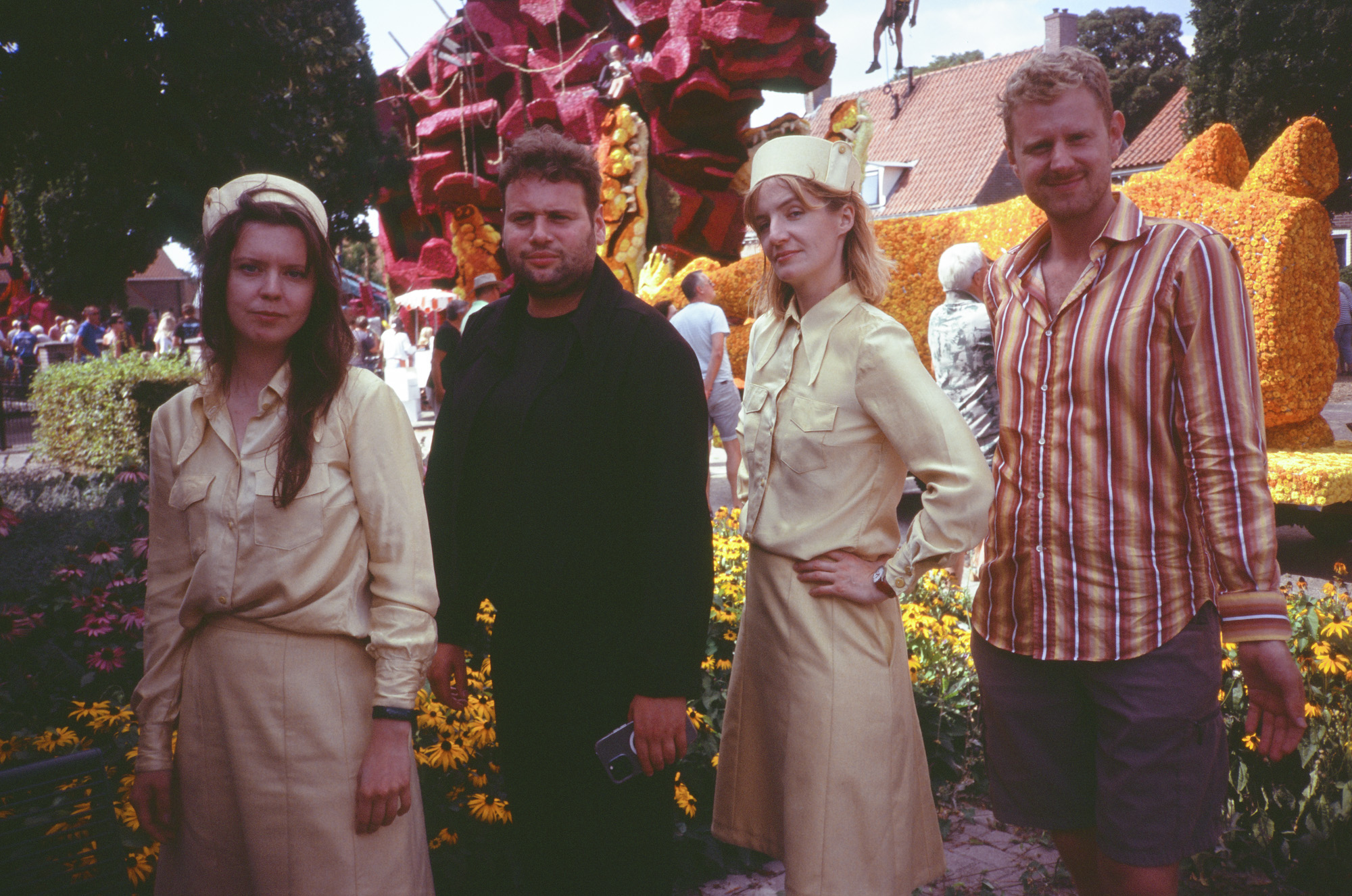
Here, with a part of the curatorial team: Jules van den Langenberg and Willem Schenk.
Polder Triennale 2022 was supported by:
(nelly&)theo van doesburg stichting, prins bernhard, cultuurfonds provincie flevoland, floriade expo 2022, stimuleringsfonds creatieve industrie, cultuurfonds almere, museum schokland, cov sint jansklooster bloemencorso, land art flevoland, design academie saaleck.